How AI Is Changing Digital Marketing in 2026
AI is transforming digital marketing in 2026 — from content creation to ad targeting and customer personalization. Here's what's actually changing and what it means for your business.
Digital Marketing
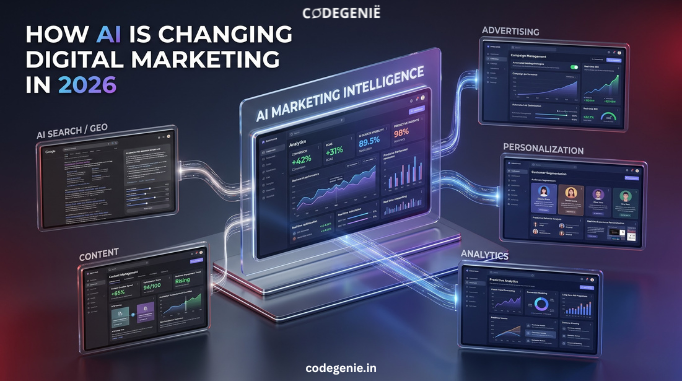
A few years ago, AI in marketing meant basic chatbots and auto-generated email subject lines. In 2026, it means something very different.
AI is now inside the tools marketers use every day — writing content, running ads, analyzing data, personalizing experiences, and predicting what customers will do next. It's not a trend anymore. It's the new baseline.
Here's what's actually changing — and what it means for your business.
1. Content Creation Is Faster Than Ever
AI writing tools have matured significantly. Marketers are using them to generate first drafts, repurpose content across formats, write ad copy variations, and produce social media posts at scale.
This doesn't mean human writers are gone. It means the best teams use AI to handle the volume — and humans to handle the strategy, tone, and quality control.
The businesses winning at content in 2026 aren't the ones writing more. They're the ones publishing smarter, faster, and more consistently than their competitors.
2. Ad Targeting Has Become Incredibly Precise
Google and Meta have built AI deep into their ad platforms. Campaigns now optimize themselves — adjusting bids, rotating creatives, and shifting budget toward the audiences most likely to convert, automatically and in real time.
Manual campaign management still matters for strategy and creative direction. But the days of manually adjusting bids hour by hour are largely over. AI does it better and faster than any human can.
The result for businesses: better return on ad spend when campaigns are set up correctly, and faster identification of what isn't working.
3. Personalization at Scale Is Now Possible
Previously, personalization was something only large enterprises could afford. In 2026, even small businesses can deliver personalized experiences — product recommendations based on browsing behavior, emails that change content based on user segments, landing pages that adapt to where a visitor came from.
This matters because users now expect relevance. A generic experience feels like a step backward. Businesses that personalize their marketing see higher engagement, better conversion rates, and stronger customer retention.
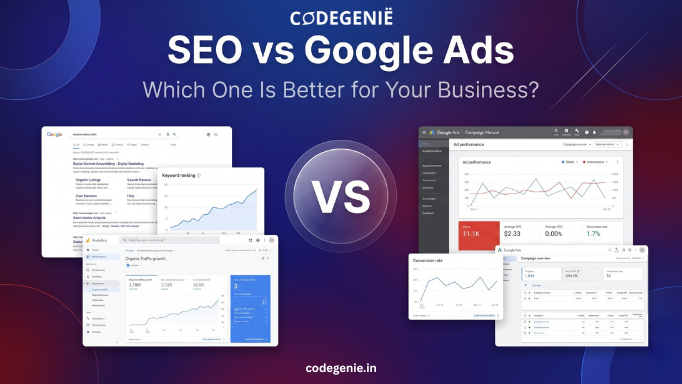
4. SEO Is Changing — Fast
AI has fundamentally changed how people search. With tools like AI Overviews appearing directly in Google search results, users are getting answers without clicking through to websites.
This means businesses need to think beyond just ranking for keywords. Content now needs to be structured in a way that AI systems can cite and reference — clear answers, well-organized structure, and genuine expertise that stands out from generic content.
SEO in 2026 is as much about being cited by AI as it is about ranking on page one.
5. Customer Support Has Transformed
AI-powered chatbots in 2026 are nothing like the frustrating bots of five years ago. They understand context, handle multi-turn conversations, and resolve a large percentage of common queries without human involvement.
For marketing, this matters because customer experience is a marketing channel. A user who gets an instant, helpful response is far more likely to convert and return than one who waits hours for a reply.
Businesses using AI for customer support are reducing response times and handling more queries without growing their support team.
6. Data Analysis and Decisions Are Faster
Marketing teams used to spend hours pulling reports and analyzing data manually. AI tools now surface insights automatically — what's working, what isn't, which audience segment is underperforming, and where budget should shift.
This means faster decisions. And in digital marketing, speed matters. A campaign that isn't working can be adjusted in hours instead of days.
What This Means for Your Business
AI isn't replacing marketers — it's replacing the parts of marketing that were repetitive, manual, and slow. Strategy, creativity, brand voice, and genuine customer relationships still require humans.
But businesses that ignore AI tools are already falling behind. The gap between teams using AI and teams not using it is growing quickly — in output volume, campaign performance, and cost efficiency.
The good news is that most AI marketing tools are accessible. You don't need an enterprise budget to start. You need the right strategy and the right team to implement it.
Where to Start
If you're new to AI in marketing, start with three things:
Content — Use AI to speed up drafting and repurposing. Keep a human in the loop for quality and brand voice.
Ads — Let Google and Meta's AI optimization do more of the heavy lifting. Focus your energy on creative strategy.
Personalization — Even basic email segmentation driven by user behavior makes a measurable difference in open rates and conversions.
Start small, measure results, and expand from there.
At CodeGenie, we help businesses build digital marketing strategies that use AI where it adds real value — not just where it's trendy. If you want to know how AI can improve your marketing results, let's talk.
Get a Free Consultation → https://www.codegenie.in/contact